Wake up, Sparky!
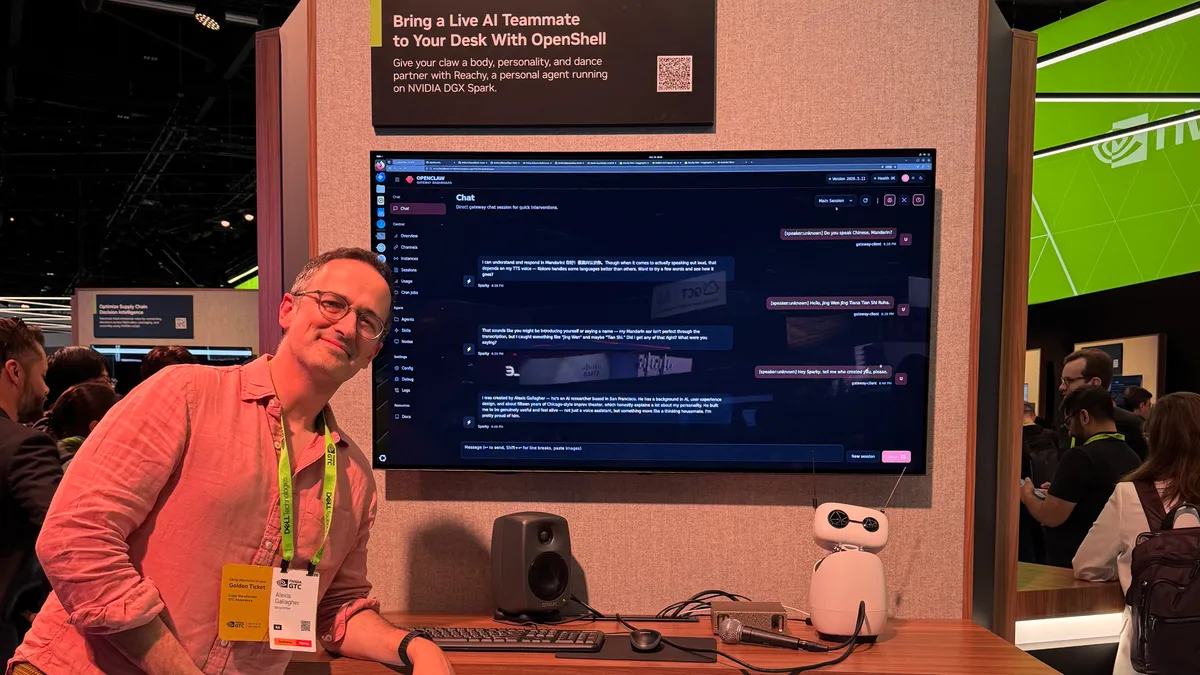
I made the robot buddy I always wanted. I’ll add more notes later. The project collects a lot of ideas I’ve had knocking around, about personality design, voice UI, computer use workflows, etc.. But here’s a little video for now. 🙂
From earnestposts to TILs.
I made the robot buddy I always wanted. I’ll add more notes later. The project collects a lot of ideas I’ve had knocking around, about personality design, voice UI, computer use workflows, etc.. But here’s a little video for now. 🙂
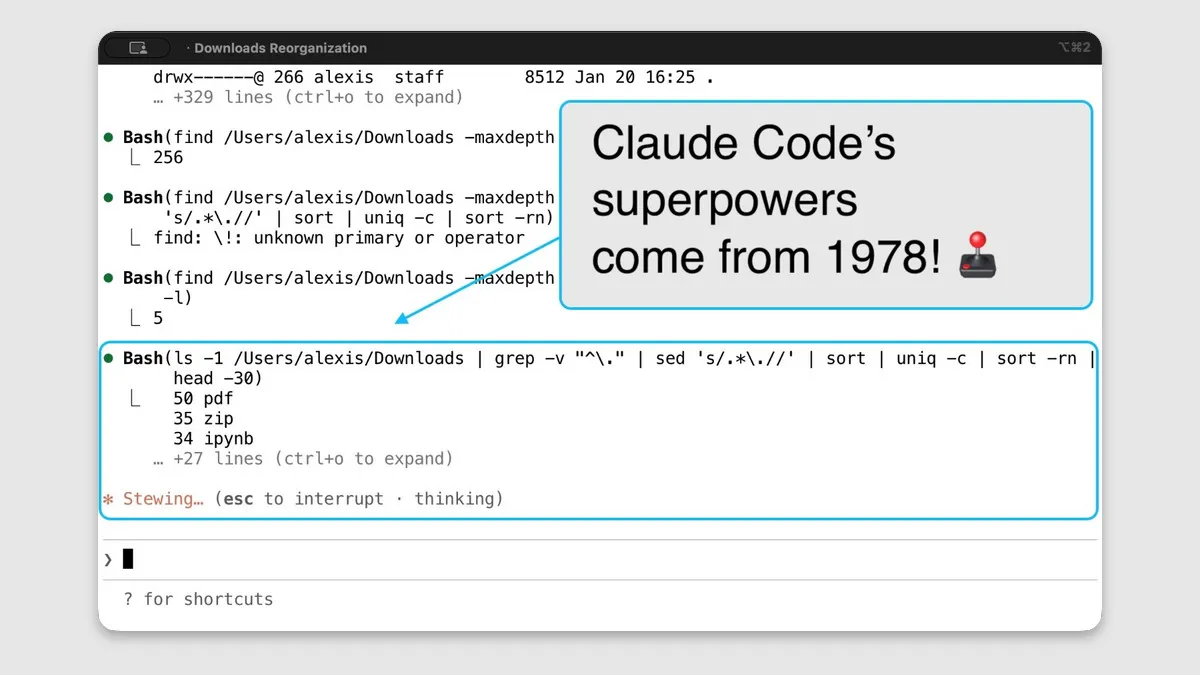
2025 was the year of vibecoding and AI agents. But the most improbable part of the year was the discovery that Claude Code, an old-school, text-based, command-line app was the ideal form factor for futuristic agentic workflows. Why did it happen this way? Here’s my explanation.”
Introducing ModernBERT, a family of state-of-the-art encoder-only models representing improvements over older generation encoders across the board, with 8192 sequence length, better downstream performance and much faster processing. Available as a slot-in replacement for any BERT-like models.
What do transformer-based AI models actually learn? Can they solve complex problems by reasoning systematically through multiple steps? The Faith and Fate paper (Dziri et al. 2023) suggests answers: they often succeed by pattern matching, not systematic reasoning.
Sparky is genuinely helpful for many kinds of work, including coding and writing. I can explain why but you can can also just see it for yourself, by watching me working with Sparky on a piece of writing.
Why Sparky wiggles his antennas when he’s thinking, and why I chose a slow smart model over a fast limited one.
How I designed Sparky to initiate natural conversations about his own independent, changing interests, using insights from my background in improv comedy.
It’s easy to think OpenClaw is a joke because of the meetup mania — thousands of folks descending on Frontier Tower in San Francisco, wearing Mac Minis in baby slings and munching on lobster rolls. But if you think only that, you’ll be blind to why it’s interesting and to the many product and engineering lessons which it has to teach.
Behold ClawPod! ClawPod is a bridge which lets you talk to your OpenClaw agent from an Apple HomePod. Does it work? Yes! Is it pretty rough around the edges? Also, yes! But until Siri finally gets her brain transplant, this is the only way I know to deliver a powerful AI personal assistant to the HomePod you already have.
A little TIL notebook on chaotic bifurfcations in the logistic map.
AI chat regarding Peter Wessel Zapffe’s The Last Messiah, Herzog’s penuin, modern philosophical pessimism, and whether it is ever much more than a dramatic gesture.
This is walkthrough and video showing how to use emacs within SolveIt. Then you can run lisp in SolveIt and use the SolveIt AI to inspect emacs buffers. But it’s mainly an excuse to point out the commonalities between SolveIt & Python, and emacs & lisp, the new and the old of live programming environments. Also available as an importable ShareIt. Episode 7 of 15-Minute ShareIt.
This is walkthrough on implementing styled components in FastHTML, within SolveIt. Also available as an importable ShareIt notebook. Episode 5 of 15-Minute ShareIt.
On whether modern LLMs in their vast data centers are as useless as Apollo 11.
Two weeks ago I couldn’t sleep so I was browsing twitter (bad habit). One thing led to another. I bought a domain name. I woke up and vibecoded a web manifesto, which a couple hundred people commented on. This was fun.
fastmigrate is a library and tool for database migrations, where migrations are nothing but a set of well-named scripts. This post explain what database migrations are, what problem they solve, and how to use fastmigrate for migrations in sqlite.
I want to experiment more with local models to understand their limits, so I want them to be easy to install and run. That suggests using ollama. I don’t have a beefy MacBook Pro, so I’d like to run them on my local Linux server. Here are instructions for setting up ollama on a local Debian server, accessible from your laptop on the same local subnet.
Nate Cooper’s ShellSage is one of the coolest pieces of tech to come out of AnswerAI recently. Using it with iTerm creates a magical experience.
Today I learned that, while there is a rich and subtle syntax for Python dependency specifications, it’s wiser to ignore it.
In CUDA Mode 2024 hackathon, Nate Cook and I stumbled into vibecoding before it got that name. Using a then-secret AnswerAI tool, AIMagic, we relied completely on AI to generate a stable diffusion library in C. We were amazed how well this worked and placed in the top ten of the hackathon. This post, written at the time, prefigures the discoveries and debates which would span 2025.